
September in northern Utah is a season of contrasts. Afternoons still reach into the 80s, but mornings along the Wasatch Front are turning crisp, and the first frost is not far off. For families back on the school-run schedule and commuters heading out before sunrise, that first cold morning is exactly when a weak battery decides to quit. In this month’s blog post, we explain why early fall is the ideal time to get your battery tested.
Summer did the damage; fall reveals it. Heat is the true enemy of a vehicle battery. High temperatures speed up the chemical reactions inside and cause fluid to evaporate, which quietly reduces capacity all summer. The vehicle still starts fine in warm weather because a warm engine turns over easily. When the temperature drops, oil thickens, the starter needs more power, and the battery delivers less of it. A battery that lost a third of its strength in August may start fine in September and fail on the first 30-degree morning in October.
Know the warning signs. A slow, labored crank is the most common signal. Dimming headlights at idle, flickering dashboard lights, a clicking sound instead of a start, and a battery warning light all point to trouble. A swollen case or corroded terminals are visual signs the battery is near the end of its life. Most batteries last three to five years, and Utah’s temperature swings push them toward the shorter end.
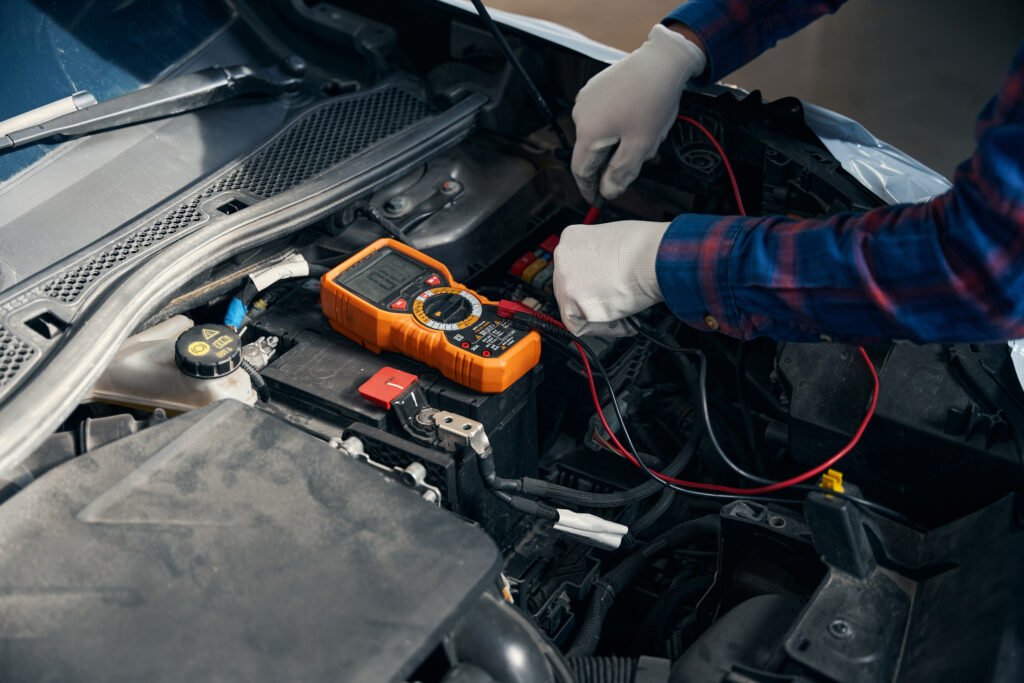
A test takes minutes and removes the guesswork. A professional load test measures how much power the battery can deliver under demand, not just its resting voltage, and confirms the alternator is doing its job. A battery that tests marginal now can be replaced on your schedule rather than at 6:45 a.m. in a school parking lot.
Small habits help. Keep terminals clean and tight. Make sure interior lights and accessories are off when you exit the vehicle. If a vehicle sits for long stretches, a short weekly drive keeps the battery charged.
Think ahead to winter. Every cold snap from here on will be harder on the battery than the last. Handling this now means one less worry when the snow arrives.
If your vehicle has been slow to start on a cool morning, do not wait for it to get worse. Call Fowers Tire and Auto Care and we will test the battery and charging system while you wait.